Straightening Teeth After 40: Why More Adults Are Choosing Clear Aligners—and Why Dentists Say It's Never Too Late

Photo: confident adult woman over 40 holding clear dental aligners smiling, via pureblissdental.com
There is a persistent cultural assumption in the United States that braces—or any form of teeth straightening—are a rite of passage reserved for middle schoolers. For decades, the image of orthodontic treatment has been synonymous with adolescence: metal brackets, rubber bands in school colors, and a countdown to the day the hardware comes off before prom.
That picture is changing rapidly. According to the American Association of Orthodontists, adults now account for more than one in four orthodontic patients in the country. And among that adult cohort, a significant and growing segment consists of individuals in their 40s, 50s, and even 60s who are choosing to address misalignment for the first time—or revisiting shifting that occurred after earlier treatment.
At RAK Dental Clinic, we have observed this trend firsthand. The questions patients in midlife ask about orthodontics are thoughtful, practical, and often more nuanced than those posed by younger patients. They want to understand not just what treatment looks like, but whether it is genuinely worth the investment at this stage of life. The answer, in most cases, is a resounding yes—with some important considerations.
Why Adults in Midlife Are Reconsidering Orthodontics
The motivations vary considerably from patient to patient. Some are responding to gradual shifting that has occurred since childhood treatment—a common phenomenon, particularly among those who did not wear retainers consistently. Others are addressing long-standing misalignment they never had the opportunity or resources to correct earlier. And a growing number are simply at a point in their lives where personal investment feels justified and appearance matters professionally and socially.
Beyond aesthetics, however, there are compelling functional reasons to pursue orthodontic correction in midlife. Misaligned teeth are more difficult to clean effectively, creating persistent areas where plaque accumulates and decay or periodontal disease can develop. An uneven bite places disproportionate stress on certain teeth, accelerating wear and increasing the risk of fractures. Correcting alignment can meaningfully improve oral hygiene outcomes and reduce the likelihood of more significant—and expensive—dental problems down the road.
Addressing the Real Clinical Considerations
Adult patients are right to raise questions that simply do not apply to younger orthodontic candidates. The oral environment of a 50-year-old is fundamentally different from that of a 14-year-old, and those differences require honest acknowledgment.
Bone Density and Tooth Movement
One concern adults frequently raise is whether their jawbone can accommodate orthodontic movement. It is true that adult bone is denser and less malleable than the developing bone of an adolescent, which means tooth movement may occur somewhat more gradually. However, this does not preclude successful treatment. Modern clear aligner systems are designed with precise, incremental force application that works effectively within adult bone structure. Treatment timelines may be modestly longer in some cases, but the clinical outcomes are well-established.
The State of Gum Health
This is perhaps the most critical prerequisite for adult orthodontic treatment. Gum disease—periodontitis—affects a substantial proportion of American adults, and active periodontal disease is a contraindication for orthodontic movement. Moving teeth through compromised bone and inflamed tissue can accelerate bone loss and undermine the entire treatment.
The appropriate sequence is straightforward: any existing gum disease must be treated and stabilized before orthodontic treatment begins. At RAK Dental Clinic, we conduct a thorough periodontal evaluation as part of the pre-treatment assessment, ensuring that patients begin their orthodontic journey on a sound foundation. For patients who do require periodontal intervention first, that step is not a setback—it is an investment in the longevity of their results.
Existing Restorations
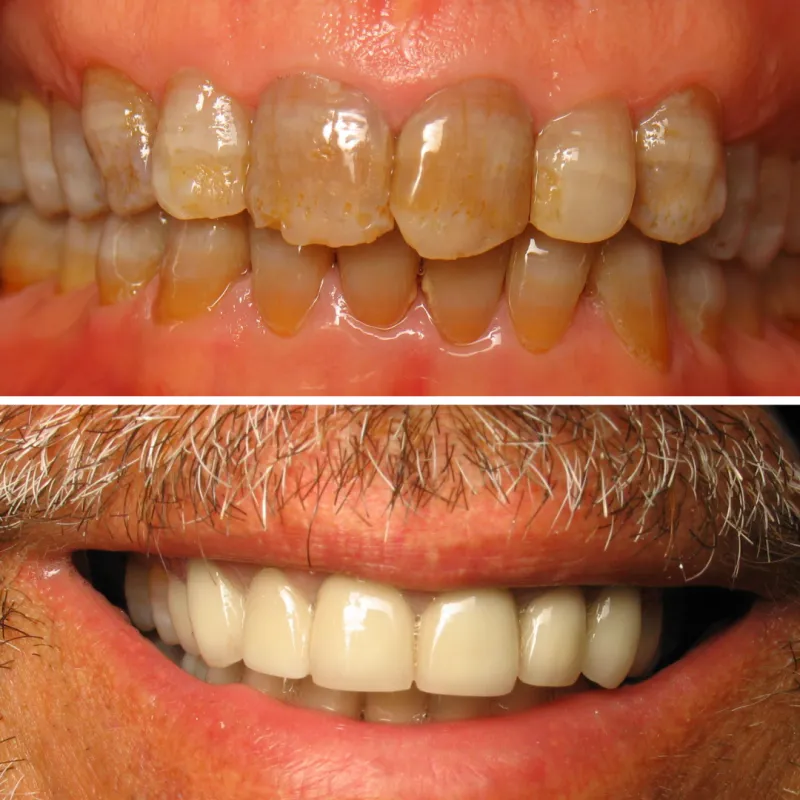
Many adults in their 40s and 50s have dental restorations—crowns, bridges, veneers, or implants—that require consideration when planning orthodontic treatment. Implants, in particular, are fused directly to the jawbone and cannot be moved orthodontically. Treatment planning must account for these fixed structures to achieve the desired alignment. This is where the experience of a dental team that understands both restorative and cosmetic dentistry becomes particularly valuable.
How Modern Clear Aligner Technology Changes the Equation
For many adult patients, the decisive factor in pursuing treatment is the dramatic evolution of clear aligner systems over the past two decades. Products such as Invisalign have transformed what orthodontic treatment looks like in practice—and that transformation is especially significant for adults navigating professional environments and active social lives.
Clear aligners are fabricated from smooth, transparent thermoplastic material and are virtually undetectable when worn. They are removable for meals and oral hygiene, eliminating the dietary restrictions and cleaning challenges associated with fixed appliances. For adults who have already established professional reputations and personal routines, this flexibility is not a trivial convenience—it is often the difference between pursuing treatment and continuing to defer it.
Beyond aesthetics and convenience, contemporary aligner technology has also become considerably more sophisticated in its clinical capabilities. Earlier iterations were limited to relatively straightforward cases. Today's systems, guided by advanced digital planning software and supported by precision attachments, can address a wide range of alignment issues including crowding, spacing, overbite, underbite, and crossbite.
The Financial Perspective: Is the Investment Justified?
Clear aligner treatment for adults typically ranges from approximately $3,000 to $8,000 depending on case complexity, geographic location, and the provider. Many dental insurance plans offer at least partial orthodontic coverage for adults, though benefits vary significantly by plan. Flexible spending accounts and health savings accounts can also be applied toward treatment costs.
When evaluating the financial question, it is worth considering the cost in relation to what misalignment may eventually require. Teeth that are difficult to clean due to crowding may develop decay or gum disease requiring fillings, root canals, or periodontal surgery—interventions that can collectively far exceed the cost of orthodontic correction. An uneven bite that stresses certain teeth may eventually lead to fractures requiring crowns or implants. Viewed through this lens, orthodontic treatment in midlife is not merely a cosmetic expenditure—it is a preventive investment with a measurable long-term return.
Dispelling the Age Myth Once and for All
Perhaps the most persistent obstacle for adult patients is not clinical or financial—it is psychological. Many people in their 40s and 50s carry an internalized belief that pursuing orthodontic treatment at this stage is somehow indulgent, unusual, or even vain. These perceptions do not reflect current clinical reality or the experiences of the many adults who have completed treatment and describe it as genuinely life-changing.
A straighter smile influences how patients feel about themselves, how confidently they engage in professional and social settings, and how diligently they maintain their oral health going forward. These are not trivial outcomes at any age.
At RAK Dental Clinic, we approach adult orthodontic consultations with the same thoroughness and individualized attention we bring to every aspect of comprehensive oral care. If you have spent years wondering whether the moment for this treatment has passed, we invite you to schedule a consultation and discover what is genuinely possible. The right time to invest in a healthier, more confident smile is not determined by your age—it is determined by your readiness to take the first step.