Facing Yourself on Screen: How Video Conferencing Is Reshaping American Dental Priorities

For most of human history, people caught glimpses of themselves in mirrors — brief, deliberate moments of self-reflection. Today, millions of Americans spend hours each week staring at a small rectangle in the corner of their laptop screen: their own face, frozen in fluorescent light, rendered in high definition. The rise of remote and hybrid work has made video conferencing a professional standard, and with it has come an entirely new form of self-awareness — one that dentists across the country are hearing about in their treatment rooms every day.
The phenomenon is real, well-documented, and consequential. Understanding what it means for your oral health — and what options exist to address the concerns it raises — is increasingly relevant for working Americans navigating this screen-centered professional landscape.
The Psychology of the Perpetual Self-View
Researchers have noted a measurable uptick in what some call "Zoom dysmorphia" — a heightened, sometimes disproportionate fixation on perceived facial flaws triggered by prolonged self-viewing during video calls. Unlike a passing glance in a bathroom mirror, a video conference presents a sustained, animated image of yourself as others might see you. The effect is not trivial.
For many Americans, this daily exposure has drawn attention to features they previously gave little thought to: the color of their teeth, the alignment of their smile, the visibility of older dental work, or the appearance of chipped or worn enamel. Dental professionals have reported a meaningful increase in consultations where patients cite video calls — not a special occasion or a photograph — as the catalyst for seeking cosmetic or restorative treatment.
At RAK Dental Clinic, our team has observed this shift firsthand. Patients who might once have deferred cosmetic consultations indefinitely are now arriving with specific, screen-informed concerns and a clear motivation to address them.
Which Treatments Are Patients Prioritizing?
The treatments gaining traction in this new environment tend to share a common thread: they address concerns that are most visible during face-to-face — or screen-to-screen — interaction.
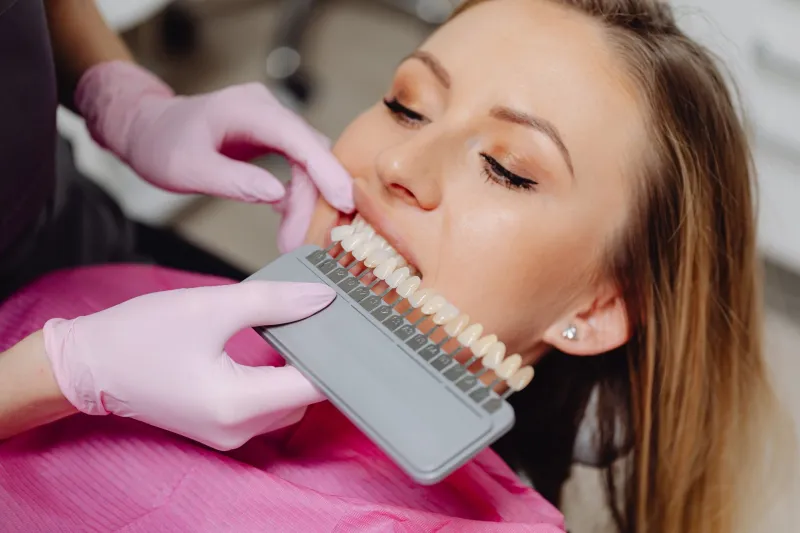
Professional Teeth Whitening Tooth discoloration is among the most frequently cited concerns among video-call-conscious patients. Professional whitening treatments, whether performed in-office or through carefully supervised take-home systems, offer results that over-the-counter products typically cannot match. Patients are increasingly seeking whitening as a first step — an accessible entry point into smile improvement that delivers visible results relatively quickly.
Porcelain Veneers For patients whose concerns extend beyond shade alone — encompassing the shape, length, or surface texture of their teeth — porcelain veneers have emerged as a highly sought option. Veneers are thin, custom-crafted shells bonded to the front surface of teeth, capable of addressing multiple aesthetic concerns simultaneously. Their natural translucency renders them particularly effective on camera, where subtlety and proportion matter.
Dental Bonding Composite bonding offers a more conservative and cost-accessible alternative for patients dealing with minor chips, cracks, or gaps. A skilled clinician applies tooth-colored resin directly to the affected area, sculpting and polishing it to blend seamlessly with surrounding teeth. The results are immediate and can make a meaningful difference in how a smile appears during a video call.
Clear Aligner Therapy Misalignment — whether mild crowding, spacing, or more pronounced irregularities — has become a more visible concern for patients who see their smiles in motion throughout the workday. Clear aligner therapy allows for orthodontic correction with minimal visual disruption during treatment, making it an appealing choice for working professionals who cannot or prefer not to wear traditional braces.
Restorative Updates Older dental work — silver amalgam fillings, aging crowns, or worn restorations — can appear more prominent on screen than patients previously realized. Many are now consulting with their dentists about modernizing these restorations with tooth-colored alternatives that offer both functional durability and improved aesthetics.
Beyond Vanity: The Broader Health Dimension
It would be reductive to frame this trend purely as vanity. For a significant portion of patients, the motivation runs deeper than appearance. Professional confidence, the willingness to speak up during meetings, and comfort during client-facing interactions are all meaningfully connected to how individuals feel about their smiles.
Research consistently demonstrates that people who are self-conscious about their teeth are more likely to smile less, speak less freely, and experience reduced self-assurance in social and professional settings. When the professional world moved to video, it removed many of the physical buffers that allowed people to manage that self-consciousness. The result, for many, has been a decision to address the underlying concern rather than continue avoiding it.
From a preventive standpoint, there is also an important secondary benefit to this heightened awareness. Patients who schedule consultations motivated by cosmetic concerns often receive comprehensive examinations that identify issues they were unaware of — early-stage gum disease, minor decay, or bite problems that, left unaddressed, would eventually require more extensive intervention. Aesthetic motivation, in other words, can serve as a meaningful entry point into broader oral health care.
What to Expect From a Smile-Focused Consultation
If video conferencing has made you more aware of your smile — and more motivated to improve it — a comprehensive cosmetic consultation is the appropriate first step. At RAK Dental Clinic, these consultations are designed to be thorough, unhurried, and genuinely patient-centered.
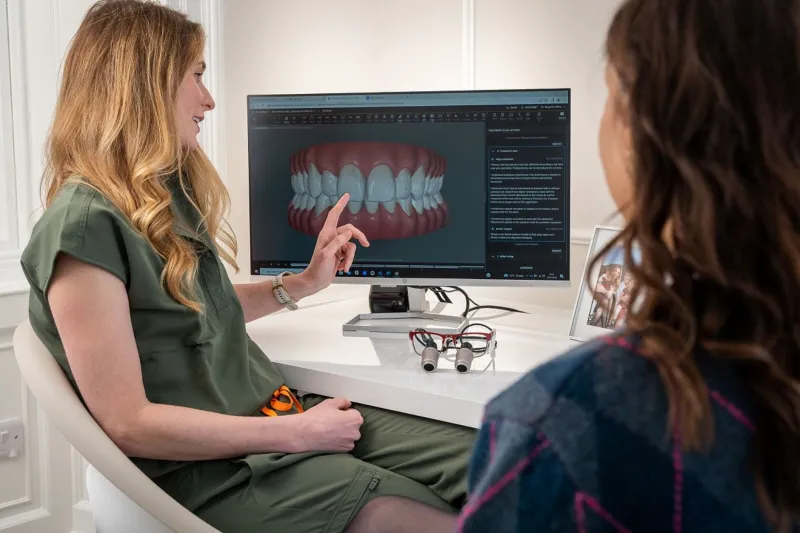
During a consultation, your dentist will assess the current condition of your teeth and gums, discuss the specific concerns you have identified, and present a range of treatment options suited to your goals, timeline, and budget. Digital imaging tools allow patients to preview potential outcomes before any treatment begins, which can be particularly reassuring for those who are uncertain about committing to a particular approach.
There is no obligation to pursue treatment following a consultation, and no concern is too minor to raise. Many patients arrive uncertain whether their concerns are clinically significant enough to warrant professional attention. The answer, consistently, is that if something affects your confidence or comfort, it is worth discussing.
A New Era of Smile Awareness
The remote work era has, in an unexpected way, prompted a national conversation about self-image, professional presentation, and the role that a healthy, attractive smile plays in both. Whatever one thinks of video conferencing as a professional norm, its effect on dental awareness appears to be largely constructive — motivating Americans to take a closer look at their oral health and to seek care they might otherwise have postponed.
At RAK Dental Clinic, we welcome that awareness. Whether your concern is subtle or substantial, cosmetic or restorative, the path to a more confident smile begins with a single conversation. We are here to help you navigate it.