Clear Aligners, Murky Rules: What Your Insurance Won't Tell You About Modern Orthodontic Care
The Clear Aligner Boom: Convenience at What Cost?
Over the past decade, clear aligners have moved from a niche orthodontic option to a mainstream fixture of American dental culture. Walk through any shopping mall, scroll through social media, or listen to a podcast, and you are almost certain to encounter an advertisement promising straighter teeth—delivered to your door, no dentist required. The market has grown dramatically, with direct-to-consumer (DTC) aligner companies collectively generating hundreds of millions of dollars annually by marketing orthodontic transformation as something as simple as ordering a new pair of shoes.
Yet behind the glossy before-and-after photographs lies a more complicated reality. Patients, insurers, and dental professionals are still wrestling with fundamental questions: When does convenience become a liability? What are the long-term consequences of skipping clinical oversight? And why have insurance companies failed to keep pace with the very treatments their policyholders are seeking?
Understanding these questions is not just an academic exercise. For the millions of Americans currently considering clear aligners, the answers carry real financial and health consequences.
Dentist-Supervised vs. Direct-to-Consumer: A Critical Distinction
Not all clear aligner treatment is created equal. At one end of the spectrum sits dentist- or orthodontist-supervised care, where a licensed professional conducts a comprehensive examination, reviews X-rays, assesses bone density and gum health, and designs a customized treatment plan. Progress is monitored at regular intervals, and adjustments are made based on clinical observation. Brands like Invisalign—when prescribed and managed by a qualified dental provider—fall into this category.
At the other end sits the DTC model, where patients take their own impressions at home using a mail-in kit, submit them to a remote company, and receive trays without ever meeting a dentist in person. Some companies have incorporated remote check-ins via app or photograph, but these do not substitute for hands-on clinical evaluation.
The distinction matters enormously. Orthodontic movement is not simply cosmetic—it involves shifting teeth through bone, which affects the surrounding gum tissue, the jawbone itself, and the long-term stability of a patient's bite. Without a proper baseline examination, conditions such as undetected gum disease, bone loss, or untreated cavities can be significantly worsened by aligner treatment. The American Association of Orthodontists has issued formal consumer alerts about DTC aligner risks, and several state dental boards have taken regulatory action against companies operating without adequate clinical oversight.
Patients who have experienced complications—including tooth root damage, bite changes, and in some cases tooth loss—have filed complaints and lawsuits against DTC providers. These cases represent a cautionary reminder that orthodontic care, however it is packaged and marketed, remains a medical treatment.
Why Insurance Coverage Has Lagged Behind
One of the most frustrating realities for patients exploring clear aligners is that insurance coverage has not kept pace with treatment innovation. Most dental insurance plans in the United States were designed around traditional orthodontic models—metal braces applied and monitored in a clinical setting—and their benefit structures have been slow to evolve.
Several factors contribute to this lag. First, insurers are cautious about expanding coverage to treatments with limited long-term outcome data, particularly DTC options where clinical oversight is absent or minimal. Second, the categorization of clear aligners varies between plans: some classify them as orthodontic benefits (which often carry lifetime maximums and age restrictions), while others treat them as cosmetic procedures, leaving patients with little to no reimbursement.
Adult orthodontic coverage is another persistent gap. Many insurance plans either exclude adult orthodontics entirely or provide substantially lower lifetime maximums for adults than for children. Since clear aligners are disproportionately popular among adult patients—many of whom are seeking to correct mild-to-moderate crowding or address relapse from previous orthodontic work—this exclusion hits the core clear aligner demographic particularly hard.
Flexible spending accounts (FSAs) and health savings accounts (HSAs) can offset some of these costs when treatment is conducted under a licensed provider, offering a degree of pre-tax relief. However, DTC aligner purchases may not always qualify, depending on how the expense is categorized and documented.
Patients are strongly encouraged to review their specific plan documents, speak directly with their insurer about clear aligner benefits, and request a predetermination of benefits before beginning any treatment. A dental office with experienced billing staff can also assist in navigating coverage and maximizing available benefits.
What to Watch for With Mail-Order Aligner Companies
For patients tempted by the lower upfront cost of DTC aligners, several warning signs deserve careful consideration before committing.
No in-person examination. Any legitimate orthodontic treatment requires a clinical assessment. Companies that rely entirely on at-home impressions or digital scans submitted without professional review are bypassing the foundational step that protects patient safety.
Limited or no follow-up care. Complications during treatment—shifting that does not go as planned, discomfort, bite changes—require professional intervention. DTC companies often lack the infrastructure to provide meaningful clinical support when problems arise.
Overpromised results. Clear aligners, whether supervised or not, have defined limitations. They are generally most effective for mild-to-moderate spacing and crowding issues. Significant bite problems, jaw misalignment, and severe crowding typically require more comprehensive orthodontic intervention. Marketing materials that suggest otherwise may be overstating what the product can deliver.
Vague refund and liability policies. Reviewing a company's terms of service carefully—particularly around what recourse patients have if treatment causes harm—is essential before purchasing.
How Dental Practices Are Responding
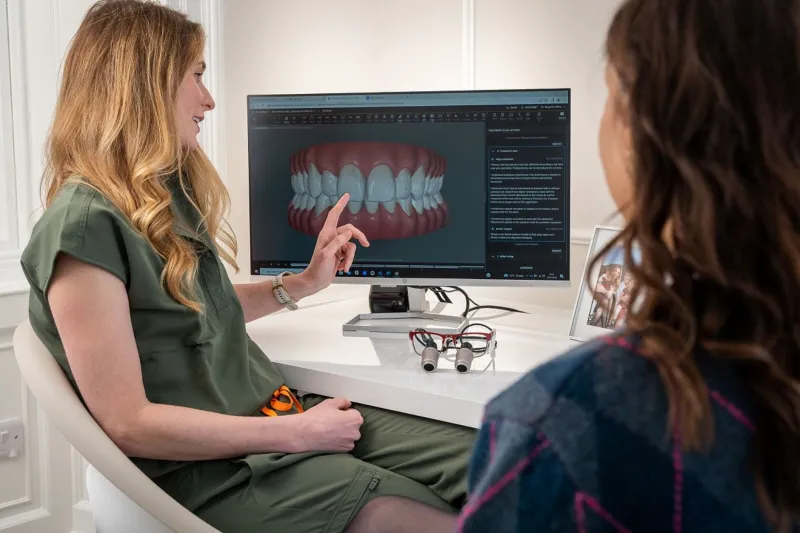
In response to the DTC aligner surge, many dental practices have invested in expanding and modernizing their own clear aligner offerings. Advanced digital scanning technology, in-office 3D imaging, and streamlined treatment planning software have made it possible for dental offices to offer clear aligner treatment that is both clinically rigorous and more patient-friendly than the traditional orthodontic experience.
At RAK Dental Clinic, clear aligner treatment is approached as a fully integrated component of a patient's comprehensive oral health plan. Before any aligner trays are fabricated, a thorough examination is conducted to assess gum health, bone structure, and existing restorations. Treatment is designed with the patient's long-term bite stability and dental health in mind—not simply the appearance of straighter teeth.
This approach reflects a broader philosophy: that cosmetic outcomes and clinical health are not competing priorities but complementary goals. A smile that looks better but has been achieved at the expense of underlying oral health is not a successful treatment outcome.
Making an Informed Choice
The clear aligner market will continue to grow, and the appeal of affordable, discreet orthodontic treatment is entirely understandable. But patients deserve complete information before choosing a path. The questions worth asking are not only about cost and convenience—they are about who is accountable for your care, what happens if something goes wrong, and whether the treatment plan was designed with your full oral health in mind.
Scheduling a consultation with a qualified dental provider is the most reliable first step. A professional evaluation can clarify whether clear aligners are appropriate for your specific situation, what a realistic treatment plan would involve, and how to approach insurance coverage strategically. The investment of time in that initial conversation can prevent far more costly complications down the road.
Straighter teeth are a worthy goal. The path to achieving them, however, should never come at the expense of the foundation that supports them.