Brighter Isn't Always Better: What Dentists Know About Whitening That the Drugstore Aisle Doesn't Tell You
Walk into any pharmacy in America and you will find an entire section dedicated to making your teeth whiter. Strips, pens, rinses, charcoal powders, LED kits—the options are dizzying, and the packaging is designed to inspire confidence. Yet dental professionals across the country consistently observe a pattern: patients who self-treat aggressively often arrive at the clinic with sensitive teeth, uneven results, or enamel that has been quietly compromised over months of unsupervised use.
The science of teeth whitening is more nuanced than most consumers realize. Getting it right requires more than purchasing the strongest product on the shelf.
How Whitening Actually Works
At its core, teeth whitening is a chemical process. The active ingredient in virtually every effective whitening product—whether professional-grade or over-the-counter—is either hydrogen peroxide or carbamide peroxide, the latter of which breaks down into hydrogen peroxide upon contact with tissue.
Peroxide molecules are small enough to penetrate the outer layer of enamel and reach the dentin beneath, where most tooth discoloration originates. Once inside, they initiate an oxidation reaction that breaks apart the chromogenic compounds—essentially the colored molecules—responsible for staining. The result, when the process works as intended, is a tooth that reflects more light and appears noticeably whiter.
The critical variable is concentration. Professional in-office treatments typically use hydrogen peroxide concentrations ranging from 25 to 40 percent, applied under controlled conditions by a trained clinician. Take-home trays prescribed by a dentist generally contain between 10 and 22 percent carbamide peroxide. Over-the-counter strips and gels, by contrast, are federally limited to concentrations that hover around 10 percent hydrogen peroxide or less.
Concentration alone does not determine outcome. Contact time, custom fit, and the condition of the patient's enamel all play significant roles.
The Case for Professional Treatment
In-office whitening offers several advantages that no drugstore product can replicate. The most immediate is speed. A single professionally administered session can lighten teeth by several shades in under two hours—an outcome that would require weeks of consistent strip application to approximate, if it is achievable at all.
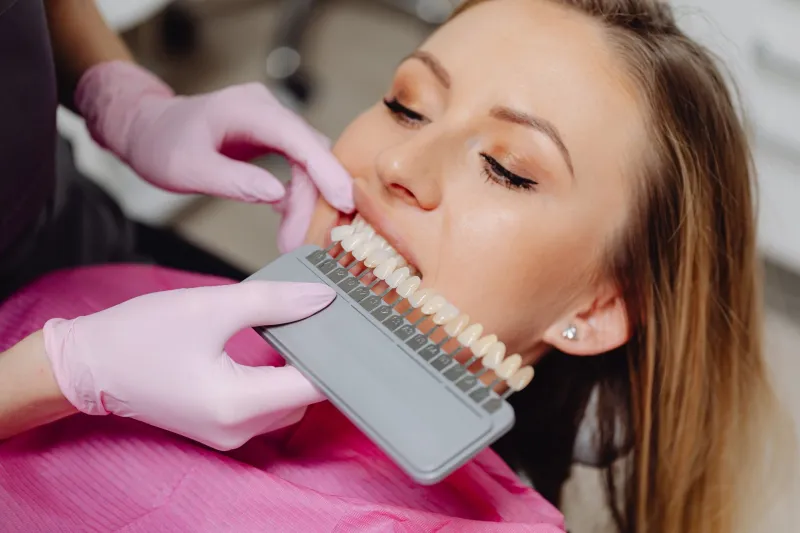
Beyond speed, the clinical environment allows for preparation that significantly reduces risk. Before any whitening agent is applied, a dentist will examine the patient's enamel integrity, check for existing restorations (which do not respond to peroxide and may create color mismatches), identify areas of recession or decay that could cause complications, and apply protective barriers to the gums. This level of individualized assessment simply does not exist when a patient tears open a box at home.
Custom take-home trays prescribed by a dental practice occupy a useful middle ground. The trays are fabricated from precise impressions of the patient's teeth, ensuring that the whitening gel contacts enamel evenly and does not pool against soft tissue. The concentrations used are stronger than anything available over the counter, and the treatment schedule is tailored to the individual. For patients seeking gradual improvement without a single extended appointment, this approach often delivers excellent, lasting results.
What Over-the-Counter Products Can and Cannot Do
It would be inaccurate to dismiss all consumer whitening products as ineffective. For patients with mild surface staining—the kind caused by coffee, tea, or red wine on otherwise healthy enamel—lower-concentration strips used as directed can produce modest improvements. They are also considerably less expensive upfront, which makes them appealing to patients who are budget-conscious.
The limitations, however, are significant. Generic strip shapes do not conform to the unique contours of every mouth, meaning some tooth surfaces receive adequate gel contact while others receive very little. Results are frequently uneven. Additionally, the cumulative effect of repeated over-the-counter use without dental supervision creates risks that are not always immediately visible.
Charcoal-based whitening products deserve particular mention. Despite their popularity on social media, the American Dental Association has not approved any charcoal dental product for whitening, and research suggests that the abrasive nature of activated charcoal may wear away enamel over time rather than brighten teeth through peroxide chemistry. The whitening effect, when it occurs, is largely the result of physical abrasion rather than oxidation—a distinction that matters greatly for long-term enamel health.
The Risks of Going Too Far
Dental sensitivity during and after whitening is extremely common, affecting a substantial percentage of patients regardless of the method used. Peroxide temporarily increases the permeability of enamel, allowing temperature changes and certain foods to trigger nerve responses. In most cases, this sensitivity resolves within a day or two after treatment concludes.
The more serious concern is overuse. Patients who pursue whitening far beyond what their enamel can tolerate—whether through excessively frequent professional sessions or chronic reliance on high-frequency OTC products—risk demineralization of the enamel surface, increased translucency at the tooth edges, and heightened long-term sensitivity that does not fully resolve. These are not hypothetical outcomes; dentists see them regularly in patients who have pursued whitening without professional guidance or who have ignored recommended intervals between treatments.
There is also the matter of restorations. Crowns, veneers, bonding, and tooth-colored fillings are fabricated from materials that do not bleach. A patient who whitens natural teeth without accounting for existing dental work may find that their restorations become noticeably mismatched—a cosmetic problem that can only be corrected by replacing the restorations at considerable expense.
Managing Expectations and Maintaining Results
One of the most important conversations a dentist can have with a whitening patient involves realistic expectations. Teeth have a natural shade range that is largely determined by genetics. While whitening can lift staining and enhance a smile's brightness, it cannot make every patient's teeth the same shade of white, nor can it produce the appearance of porcelain veneers through chemistry alone.
Maintaining results requires behavioral adjustments. The 48-hour period immediately following whitening treatment is when teeth are most vulnerable to restaining, as the enamel's pores remain temporarily open. Avoiding deeply pigmented foods and beverages—coffee, red wine, berries, tomato-based sauces—during this window can meaningfully extend the duration of results.
Long-term, touch-up treatments every six to twelve months, combined with consistent brushing and professional cleanings, allow most patients to preserve their results without repeated full courses of whitening.
A Smarter Approach to a Brighter Smile
The appeal of a whiter smile is entirely understandable, and cosmetic dentistry has made achieving one more accessible than ever before. What separates a safe, satisfying outcome from one that creates new problems is the involvement of a qualified dental professional who can assess your individual oral health, recommend the appropriate treatment method and concentration, and monitor your results over time.
At RAK Dental Clinic, whitening consultations are approached as an extension of comprehensive oral care—not as a standalone cosmetic transaction. Before any brightening treatment begins, the health of your enamel, the condition of existing restorations, and your personal goals are all considered. The result is not just a whiter smile, but one that is achieved safely and built to last.
If you have questions about whitening options or are curious whether your teeth are good candidates for treatment, a conversation with your dental provider is always the right starting point.