Your Gums Are a Window Into Your Whole Body — And Most Americans Aren't Looking
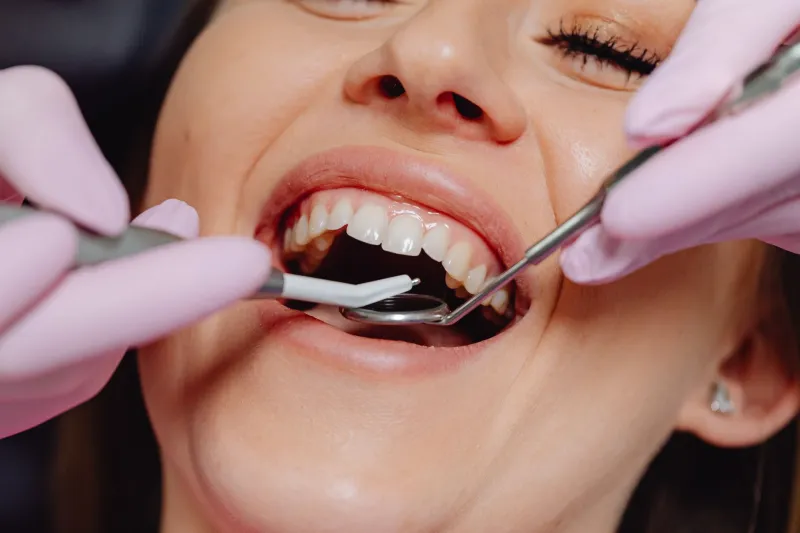
There is a quiet epidemic unfolding in the mouths of American adults. The Centers for Disease Control and Prevention estimates that nearly 47 percent of adults over thirty have some form of periodontal disease — and among adults over sixty-five, that figure climbs above 70 percent. Yet despite its staggering prevalence, gum disease remains one of the most underappreciated health concerns in the country, often treated as a dental inconvenience rather than what accumulating research suggests it actually is: a systemic inflammatory condition with consequences that reach far beyond the oral cavity.
The conversation about gum disease and heart health has existed for some time. What is less widely understood is the breadth of the body's systems that periodontal inflammation appears to influence — among them immune regulation, reproductive health, hormonal balance, and the biological processes associated with aging. Understanding these connections is not alarmism. It is an invitation to take gum health seriously as a cornerstone of whole-body wellness.
What Periodontal Disease Actually Is
Before exploring its systemic reach, it is worth establishing what periodontal disease involves at a biological level. The condition begins with the accumulation of bacterial biofilm — plaque — along and beneath the gumline. When this biofilm is not adequately disrupted through daily cleaning and professional care, the bacteria it harbors trigger an immune response in the surrounding tissue. The gums become inflamed, a stage known as gingivitis.
Left unaddressed, gingivitis can progress to periodontitis, in which the inflammation extends deeper, affecting the ligaments and bone that anchor teeth in place. At this stage, pockets form between the gums and teeth, harboring increasingly aggressive bacterial communities. The immune system responds with chronic, low-grade inflammation — and it is this sustained inflammatory state that creates pathways to the rest of the body.
The mouth is not a sealed compartment. It is richly vascularized, meaning that bacteria and the inflammatory mediators they trigger have direct access to the bloodstream. From there, the effects are systemic.
The Cardiovascular Connection — and What Lies Beyond It
The link between periodontal disease and cardiovascular conditions is the most established of the systemic associations. Multiple large-scale studies have found that individuals with significant gum disease carry a measurably elevated risk of heart attack, stroke, and arterial disease. Oral bacteria have been identified in arterial plaques, and the chronic inflammatory burden of periodontal disease appears to accelerate the processes that compromise vascular health.
But the science does not stop there, and the emerging research in adjacent areas deserves equal attention.
Autoimmune and Inflammatory Conditions
Researchers studying rheumatoid arthritis have identified a particularly notable relationship. Porphyromonas gingivalis, a bacterial species central to periodontal disease, produces an enzyme capable of generating modified proteins that appear to trigger the autoimmune response characteristic of rheumatoid arthritis. Studies have found that people with rheumatoid arthritis have significantly higher rates of periodontal disease, and that treating gum disease can reduce the severity of arthritis symptoms in some patients. The directionality of this relationship is still being studied, but the connection is substantive enough to have changed clinical thinking in rheumatology.
Similar associations are being explored in relation to other inflammatory and autoimmune conditions, including inflammatory bowel disease and lupus. The hypothesis is consistent: chronic oral inflammation amplifies systemic inflammatory burden, which can exacerbate conditions that depend on immune regulation.
Fertility and Reproductive Health
Perhaps the most striking and least discussed area of emerging research involves reproductive outcomes. Studies have found associations between periodontal disease and difficulty conceiving, with some research suggesting that women with untreated gum disease may take longer to become pregnant than those with healthy gums. The proposed mechanism involves inflammatory cytokines — chemical messengers produced during periodontal inflammation — that may interfere with the hormonal environment necessary for conception and implantation.
The pregnancy connection extends further. Periodontal disease has been associated with preterm birth and low birth weight in multiple studies. Hormonal changes during pregnancy can also cause gum tissue to respond more dramatically to bacterial presence, making pregnant women more susceptible to gum inflammation — a condition sometimes called pregnancy gingivitis. This creates a bidirectional concern: gum disease may complicate pregnancy, and pregnancy may worsen gum disease if preventive care is not maintained.
For individuals and couples navigating fertility challenges, the inclusion of a periodontal evaluation in their broader health assessment is a step that remains underutilized.
Hormonal Disruption and Skin Aging
The relationship between periodontal disease and hormonal health is an area where research is still developing, but early findings are compelling. Inflammatory cytokines produced by gum disease appear to interact with hormonal signaling pathways, potentially contributing to disruptions in estrogen metabolism and cortisol regulation. For women navigating perimenopause, the compounding effect of hormonal shifts on gum tissue sensitivity — and the potential for gum disease to contribute to systemic inflammatory load during an already demanding biological transition — is a consideration that warrants clinical attention.
On the question of skin aging, chronic systemic inflammation is one of the primary biological drivers of accelerated cellular aging. The collagen degradation that periodontal bacteria promote locally in the gum tissue mirrors broader processes that occur throughout the body under sustained inflammatory conditions. While research directly linking gum disease to visible skin aging is still preliminary, the mechanistic pathway is coherent and consistent with what is understood about inflammation's role in aging broadly.
Why Mainstream Medicine Has Been Slow to Respond
Despite the weight of this evidence, the integration of periodontal health into primary care and specialty medicine in the United States remains limited. Physicians rarely screen for gum disease. Referrals between medical and dental providers are uncommon. Insurance structures treat dental and medical care as entirely separate domains, reinforcing a clinical siloing that does not reflect biological reality.
This is beginning to change. Some health systems have started incorporating oral health screenings into primary care visits. Researchers are calling for greater interdisciplinary collaboration. But for most American patients, the connection between their gum health and their broader medical picture will not be raised unless they raise it themselves — or unless their dental provider takes a comprehensive, whole-body approach to the care conversation.
What Patients Can Do Now
The good news is that periodontal disease is both preventable and, in its earlier stages, highly treatable. The foundation of gum health is consistent: twice-daily brushing with a soft-bristled brush, daily interdental cleaning, and professional cleanings and evaluations at intervals appropriate to your individual risk level.
For patients who already have signs of gum disease — bleeding gums, persistent bad breath, gum recession, or sensitivity — professional treatment should not be deferred. Scaling and root planing, the standard non-surgical treatment for periodontitis, has been shown to reduce systemic inflammatory markers, not just local gum inflammation. In more advanced cases, additional intervention may be necessary, but the earlier treatment begins, the more favorable the outcomes.
At RAK Dental Clinic, we approach gum health as exactly what the research supports it to be: a critical component of your overall health, not an ancillary concern. A thorough periodontal evaluation is part of every comprehensive examination we conduct, because we understand that what we find in your mouth may have implications that extend well beyond it.