The Data You're Sleeping Through: What Your Hygienist Knows That You Don't
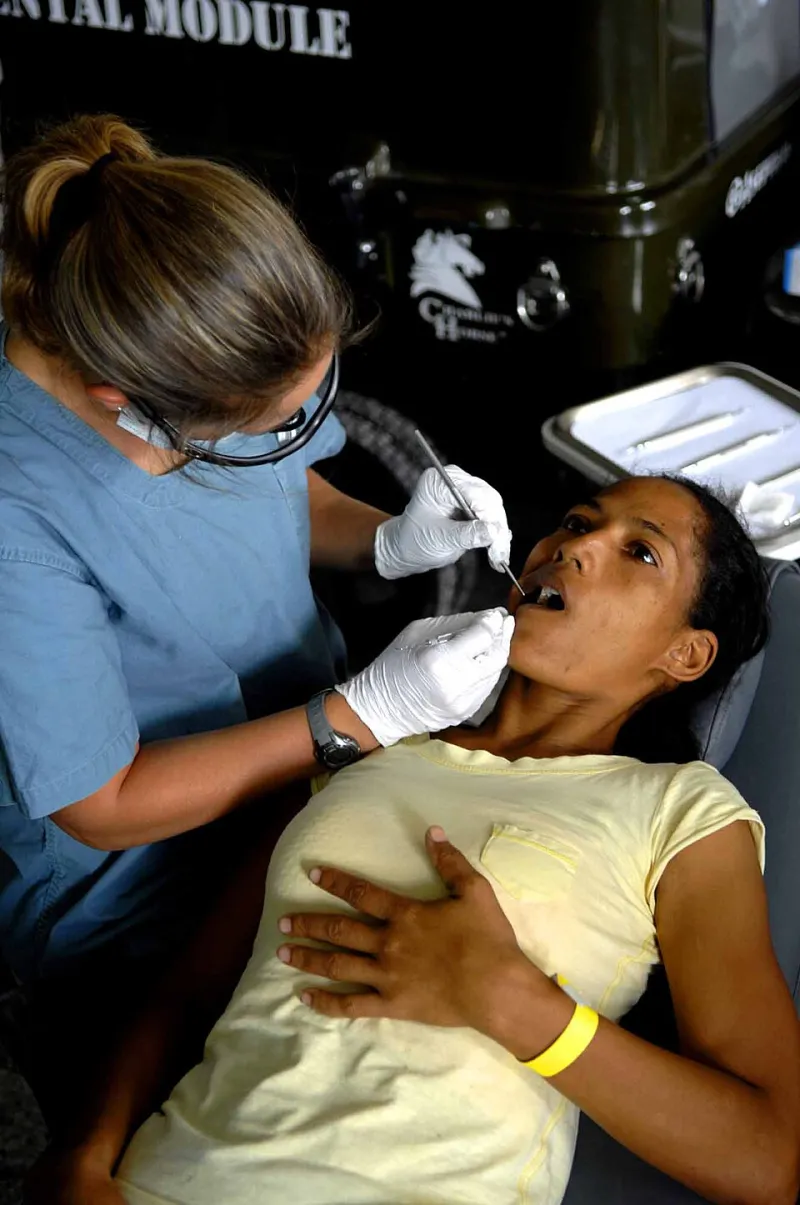
Photo: U.S. Air Force photo by Airman 1st Class Benjamin Stratton, Public domain, via Wikimedia Commons
From the other side of the chair, the twice-yearly cleaning is one of the strangest appointments in American healthcare. A clinician spends the better part of an hour inches from a patient's face, recording numbers, noting changes, comparing this visit's findings against last year's chart — and when the instruments come out of the patient's mouth, the most common question is a cheerful 'So, how have you been?' before the conversation moves entirely to weekend plans.
That silence represents a missed opportunity. A hygiene visit is not a car wash. It is a data-rich checkpoint, and the information gathered during it is most valuable when the patient engages with it.
Ask for the Numbers
'What are my pocket depths, and have they changed since last time?' Periodontal charting measures the space between your gum and tooth in millimeters. One to three millimeters is healthy; four may warrant attention; five and above suggests active gum disease. Many patients have never heard a single number from their own chart. Ask. A pocket that deepens from three to four millimeters over two years is a trend worth discussing — but only if you know it exists.
'Am I building tartar in the same spots as always?' Calculus accumulates in patterns. Heavy buildup behind the lower front teeth, for instance, often points to salivary gland position or a brushing technique that misses that zone. Your hygienist can map the pattern; you can then fix the habit causing it.
Ask About What the Eye Can't See
'Do you see any early wear, erosion, or craze lines?' Enamel wear is gradual and invisible in the mirror until it is advanced. Hygienists notice the flattening of cusps from grinding, the cupping on chewing surfaces from acidic diets, and the thin craze lines that precede fractures. Catching these at year one is a conversation; catching them at year ten is a crown.
'How do my gums look compared to six months ago?' Slight inflammation, recession, or bleeding on probing may not rise to the level of a diagnosis, but the trend line matters. Dentistry's greatest advantage is its ability to watch disease develop slowly — if someone is looking.
Ask About Your Own Hands
'Can you watch my technique and tell me honestly what I'm missing?' Most patients brush the surfaces they can see and neglect the gumline and inner surfaces of back teeth. A two-minute demonstration — where your hygienist shows your mouth's specific blind spots — is worth more than any generic advice online.
'What one thing should I change before my next visit?' Not five things. One. Behavior change survives on focus, and a good hygienist will prioritize rather than lecture.
Your Appointment, Reclaimed
Here is a perspective worth adopting: you are paying for a clinician's undivided attention and a full diagnostic workup. Arriving with three or four informed questions transforms the visit from a passive errand into a collaborative review of your own health data. Patients who do this consistently catch problems at the stage where they are cheap, painless, and simple to fix. Patients who do not often meet those same problems years later, at the stage where they are none of those things.
The chair reclines either way. The difference is whether you show up as a passenger or a participant.