Not Just Plaque: The Living Bacterial Cities Hiding in Your Mouth and Why Your Toothbrush Alone Cannot Evict Them
For decades, the dental conversation around prevention has centered on one familiar enemy: plaque. Brush it away. Floss it out. Rinse it off. The message has been consistent, and for many Americans, it has become routine — even automatic. Yet despite widespread adoption of these habits, gum disease remains one of the most prevalent chronic conditions in the United States, affecting nearly half of adults over the age of 30, according to the Centers for Disease Control and Prevention.
The reason that statistic stubbornly refuses to improve may not be a failure of effort. It may be a failure of understanding. Specifically, a failure to appreciate the difference between ordinary plaque and something far more formidable: dental biofilm.
What Plaque Actually Is — and Where the Definition Falls Short
When most people hear the word "plaque," they picture the soft, sticky film that coats teeth after a meal or overnight while sleeping. That description is not wrong, but it is incomplete. Plaque is, at its most basic, an accumulation of bacteria on the tooth surface. Early-stage plaque is relatively disorganized — a loose congregation of microorganisms that a toothbrush can reasonably disturb and remove.
The problem begins when that loose congregation is allowed to mature. Within 24 to 72 hours of forming, bacterial communities on the tooth surface begin reorganizing themselves into something far more sophisticated: a biofilm.
A biofilm is not simply more plaque. It is a fundamentally different biological structure. Researchers describe it as a self-organized microbial ecosystem — one in which multiple species of bacteria communicate with one another, divide labor, and collectively produce a protective matrix of proteins, polysaccharides, and extracellular DNA. This matrix, sometimes called the "slime layer," is not incidental to the biofilm's existence. It is its armor.
Why Biofilm Laughs at Your Toothbrush
The protective matrix that encases a mature dental biofilm dramatically alters how bacteria within it respond to external threats. Studies published in microbiology journals have demonstrated that bacteria living inside a biofilm can be anywhere from 100 to 1,000 times more resistant to antimicrobial agents than the same bacteria in an unorganized state. That includes antiseptic mouthwashes, fluoride rinses, and, critically, the mechanical action of brushing.
This resistance operates through several mechanisms. The matrix itself acts as a physical barrier, slowing the penetration of antimicrobial compounds before they can reach bacteria deeper within the structure. Additionally, bacteria within biofilms communicate through a process called quorum sensing — essentially a chemical signaling system that allows the community to coordinate defensive responses when it detects a threat. Some species within the biofilm even sacrifice themselves to produce substances that neutralize incoming antimicrobials, protecting their neighbors in the process.
From a clinical standpoint, this means that a person can brush diligently, floss consistently, and still leave substantial biofilm communities intact — particularly in the areas where biofilm matures fastest: the gumline, the spaces between teeth, and the grooves on the chewing surfaces of molars.
The Systemic Stakes: Why This Is Not Just a Dental Problem
The conversation about dental biofilm has expanded considerably in recent years, driven by a growing body of research connecting oral biofilm communities to conditions well beyond the mouth. Scientists have identified oral bacteria — particularly species associated with mature biofilm — in the arterial plaques of heart disease patients, in the cerebrospinal fluid of individuals with cognitive decline, and in the joint tissue of patients with certain forms of arthritis.
The leading hypothesis is not that oral bacteria are directly causing these conditions in every case, but rather that chronic biofilm-related inflammation in the gums creates a persistent portal through which bacteria and inflammatory mediators enter the bloodstream. When that systemic inflammatory burden is sustained over months or years, it may contribute meaningfully to the progression of cardiovascular, metabolic, and neurological disease.
For patients in the United States already managing conditions such as type 2 diabetes, hypertension, or elevated cardiovascular risk, this connection carries particular weight. Emerging evidence suggests that individuals with poorly controlled gum disease — the direct consequence of unchecked biofilm — face measurably worse outcomes in managing these systemic conditions.
What Evidence-Based Biofilm Disruption Actually Looks Like
If conventional brushing is insufficient against mature biofilm, what does a genuinely effective routine look like? Dental researchers and clinicians are converging on several evidence-supported strategies.
Mechanical disruption remains essential — but technique matters enormously. The goal of brushing is not to remove visible debris but to physically disrupt biofilm architecture before it fully matures. This requires attention to the gumline, where biofilm is most clinically consequential. A soft-bristled brush held at a 45-degree angle to the gum tissue, using small circular or vibratory strokes rather than horizontal scrubbing, reaches further into the sulcus — the shallow pocket between tooth and gum — where early biofilm formation occurs.
Interdental cleaning is non-negotiable. Toothbrush bristles cannot access the contact points between teeth, which represent some of the most active sites for biofilm accumulation. Traditional floss, interdental brushes, and water flossers each offer different mechanical advantages depending on the spacing between teeth. For individuals with tight contacts, waxed floss remains effective. For those with wider spaces or dental work such as bridges and implants, interdental brushes provide superior biofilm disruption.
Timing is more important than most patients realize. Because biofilm begins reorganizing within hours of disturbance, the frequency and consistency of cleaning matter as much as the tools used. A single thorough cleaning per day is substantially less effective than two moderately thorough sessions timed to interrupt biofilm at different stages of its development cycle.
Adjunctive rinses can enhance — but not replace — mechanical care. Certain antimicrobial rinses containing chlorhexidine or essential oil formulations have demonstrated modest efficacy against early-stage biofilm when used consistently. However, because mature biofilm resists chemical penetration, these products are most effective immediately following mechanical disruption, when the protective matrix has been physically broken open.
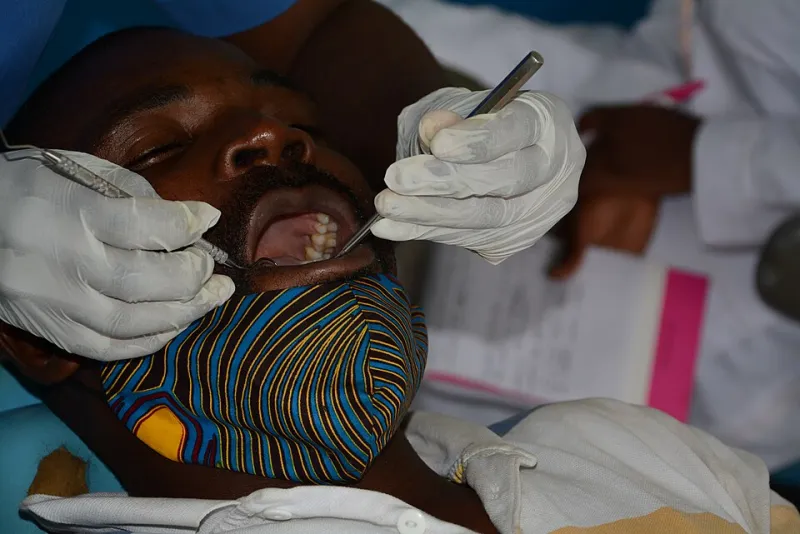
Professional disruption cannot be replicated at home. Even the most disciplined home care routine allows some biofilm to mature into calculus — hardened mineral deposits that bond to tooth surfaces and can only be removed with professional instruments. Regular professional cleanings, typically every six months for low-risk patients and more frequently for those with active gum disease, remain the only reliable method for eliminating calculus and resetting the biofilm environment.
A New Framework for Prevention
The shift from thinking about plaque to thinking about biofilm is not merely semantic. It reframes oral hygiene as an ongoing, active process of disruption rather than a simple cleaning task — one that requires consistency, correct technique, and professional partnership to truly succeed.
At RAK Dental Clinic, we believe that patients who understand what they are actually managing are better equipped to protect their long-term health. Biofilm science has fundamentally changed what comprehensive preventive care looks like, and those insights deserve to be part of every conversation we have with our patients — not just in the operatory, but in the practical, daily decisions that determine whether a smile remains healthy for decades to come.
If you are uncertain whether your current routine is adequate, or if you have concerns about gum inflammation, sensitivity, or persistent bad breath — all potential signs of active biofilm-related disease — we encourage you to schedule a comprehensive evaluation. The bacteria in your mouth may be more organized than you think. Your care plan should be, too.