The Dentist Avoidance Cycle: Understanding Why Millions of Americans Skip Care and How Today's Practices Are Breaking the Pattern
Consider for a moment the profile of a person who has not seen a dentist in five years. They are not, in the popular imagination, someone indifferent to their health. They likely exercise, maintain a reasonable diet, and schedule their annual physical without much hesitation. They are, by most measures, a responsible adult. And yet the thought of sitting in a dental chair produces a visceral response—a tightening in the chest, a surge of dread—that no amount of logical self-talk can fully quiet.
This person is not unusual. According to research published in dental and psychological literature, somewhere between 30 and 40 million Americans avoid the dentist due to fear or anxiety. For roughly 10 to 15 percent of the adult population, the avoidance is so severe it qualifies as a clinical phobia. Understanding why this happens—and why conventional reassurances so often fail—is the first step toward genuinely addressing it.
It Rarely Starts With Pain
The popular narrative around dental anxiety positions pain as the central villain. And pain certainly plays a role. But clinical psychologists and dental professionals who specialize in anxious patients consistently report that the fear of pain is often a secondary concern, layered over something more fundamental.
For a significant proportion of anxious patients, the core issue is loss of control. The dental chair is, by design, a position of vulnerability: reclined, mouth open, unable to speak, with instruments and unfamiliar hands operating in one of the most sensitive and personal spaces of the body. For individuals who have experienced trauma—medical, dental, or otherwise—this configuration can trigger deeply embedded psychological responses that bypass rational thought entirely.
Past negative dental experiences, particularly those occurring in childhood, are among the strongest predictors of adult dental anxiety. A dismissive or impatient provider, an inadequately numbed procedure, or even a sense of being rushed or unheard during a childhood appointment can leave impressions that shape a person's relationship with dental care for decades.
Social factors compound the issue. Shame and embarrassment—particularly for patients whose avoidance has already led to visible dental deterioration—create a cruel feedback loop. The longer someone avoids care, the more their oral health declines; the more it declines, the more ashamed they feel about seeking care; the more ashamed they feel, the longer they avoid. It is a cycle that, without deliberate intervention, tends to deepen rather than resolve on its own.
The Real Cost of Avoidance
Dental anxiety is not a benign quirk. The health consequences of chronic dental avoidance are well-documented and extend considerably beyond tooth decay.
Untreated gum disease, which advances silently and painlessly in its early stages, has been associated in research with elevated risks for cardiovascular disease, diabetes complications, and adverse pregnancy outcomes. Untreated oral infections can, in rare but serious cases, spread to the jaw, neck, or bloodstream. Tooth loss—which avoidance accelerates—affects nutrition, speech, and self-esteem in ways that ripple into overall quality of life.
Perhaps most insidiously, the pain that anxious patients fear is far more likely to occur as a consequence of avoidance than as a result of attending regular preventive appointments. Routine checkups are, by design, largely non-invasive. The procedures that generate genuine discomfort—extractions, root canals, surgical interventions—are overwhelmingly the result of conditions that regular care would have detected and addressed at a much earlier, more manageable stage.
What Trauma-Informed Dental Care Actually Means
In recent years, a growing number of dental practices have adopted what is broadly described as trauma-informed care—an approach borrowed in part from behavioral health that recognizes the role of past adverse experiences in shaping present responses.
In practical terms, trauma-informed dental care involves several concrete shifts in how appointments are structured and how providers communicate. It begins with intake processes that invite patients to disclose anxiety and past negative experiences without judgment. It continues with providers who slow down, narrate each step of a procedure before performing it, and explicitly offer patients mechanisms for signaling discomfort or requesting a pause—a raised hand, a pre-agreed word, whatever feels most accessible to the individual.
This approach is not merely compassionate; it is clinically strategic. Patients who feel a genuine sense of control over what is happening to them exhibit measurably lower anxiety responses. Trust, once established, tends to be durable—anxious patients who find a provider they trust often become among the most reliably consistent in their attendance.
Sedation Options: A Spectrum of Solutions
For patients whose anxiety cannot be adequately managed through communication and environmental modifications alone, modern dental practices offer a range of sedation approaches that have transformed what is possible.
Nitrous oxide—commonly known as laughing gas—remains one of the most widely used and well-tolerated options. Administered through a small mask worn over the nose, it produces a state of relaxed calm within minutes and wears off rapidly, allowing most patients to drive themselves home afterward. It does not render patients unconscious; rather, it softens the edges of anxiety and makes the experience feel less threatening.
Oral conscious sedation—typically a prescribed anti-anxiety medication taken before the appointment—produces a deeper state of relaxation. Patients remain conscious and responsive but are often significantly less aware of the passage of time and retain little memory of the procedure afterward. This option requires a driver and a brief recovery period.
For patients with severe phobia or those undergoing complex procedures, IV sedation or general anesthesia, administered by a qualified anesthesiologist or sedation-trained dentist, offers the deepest level of relief. These options are typically reserved for cases where other approaches are insufficient.
Technology as a Trust-Building Tool
Beyond sedation, technological advances in modern dental practices are quietly reshaping the experience of care in ways that directly address anxiety triggers.
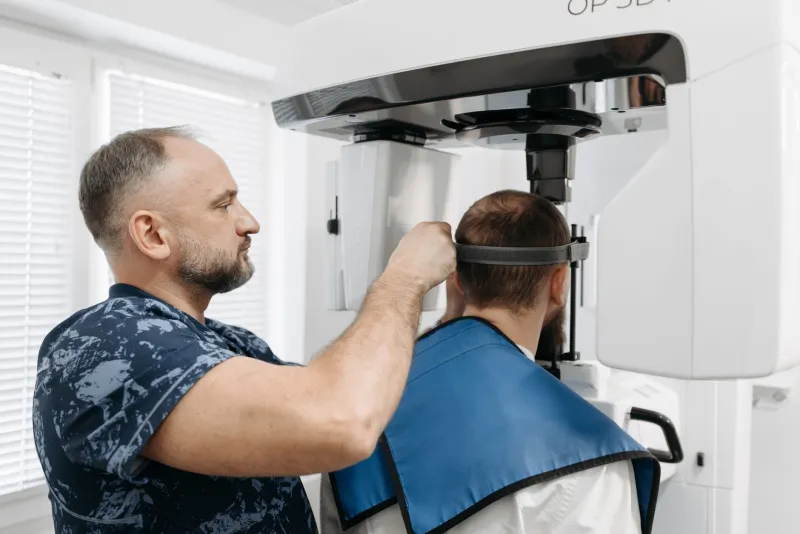
Digital X-rays reduce radiation exposure and eliminate the uncomfortable bite-wing film holders that many patients find distressing. Intraoral cameras allow patients to see exactly what their dentist sees, replacing the opacity of unexplained clinical observations with visual transparency. Laser dentistry, for certain soft-tissue procedures, reduces the need for injections and minimizes post-treatment discomfort.
Some practices have invested in environmental modifications—quieter equipment, noise-canceling headphone options, adjusted lighting—that reduce the sensory intensity of the dental environment. These may seem like small gestures, but for patients whose anxiety is partly triggered by the sounds and smells associated with dental settings, they represent meaningful accommodations.
Starting the Conversation
For anyone who recognizes themselves in the patterns described here, the most important step is also the simplest: tell your dental team. A practice that is genuinely equipped to support anxious patients will welcome this disclosure, not dismiss it. At RAK Dental Clinic, we approach every patient as an individual with a distinct history and a distinct set of needs. Anxiety is not an obstacle to care—it is a clinical consideration that shapes how we design your experience from the first phone call onward.
The chair does not have to feel like a threat. With the right team, the right tools, and the right approach, it can become something far more powerful: the place where the cycle of avoidance finally ends.