Braces, Retainers, and Regret: How Adolescent Orthodontic Decisions Echo Through a Lifetime of Oral Health
What a Teenager's Smile Reveals Decades Later
For most American families, orthodontic treatment is a rite of passage—a few years of braces, a retainer, and a straighter smile at the end. What rarely enters the conversation is what happens after the braces come off, or what it means if treatment was delayed, refused, or abandoned midway. Dental professionals who treat adults in their 30s and 40s frequently trace complex, costly problems back to decisions made in adolescence—decisions that seemed minor at the time.
Understanding the long arc of orthodontic consequences is not about assigning blame. It is about equipping parents, patients, and young adults with a clearer picture of what is actually at stake.
The Window That Won't Stay Open
Adolescence represents a narrow biological window during which the jaw bones are still developing and the teeth are moving into their permanent positions. Orthodontic treatment during this period takes advantage of natural growth processes, making tooth movement more efficient and outcomes more stable than treatment initiated in adulthood.
When significant misalignment, crowding, or bite problems go unaddressed during these years, the jaw continues to develop around those irregularities. By the time a person reaches their mid-20s, the bones have largely matured, and correction becomes more complex, more time-consuming, and considerably more expensive.
Dental professionals consistently report that patients who arrive in their 30s with crowding, crossbites, or open bites often have a history of recommended orthodontic treatment that was never pursued—sometimes due to cost, sometimes due to the patient's own resistance during adolescence.
The Retainer Problem: Small Habit, Large Consequences
Of all the orthodontic failures that dentists observe in adult patients, retainer non-compliance may be the most prevalent and the most preventable.
After orthodontic treatment concludes, teeth are not permanently fixed in their new positions. The periodontal ligaments—the connective fibers that hold teeth in the jawbone—retain a kind of memory of their original orientation. Without consistent retainer wear, teeth gradually drift. This process, known as orthodontic relapse, can begin within weeks of discontinuing retainer use and accelerates significantly through the late teens and early 20s.
In clinical practice, it is not unusual to encounter patients in their late 30s who completed orthodontic treatment as teenagers, wore their retainer inconsistently for a year or two, and now present with crowding that is nearly as severe as before treatment. The cost of retreatment—and the time involved—often exceeds what the original intervention required.
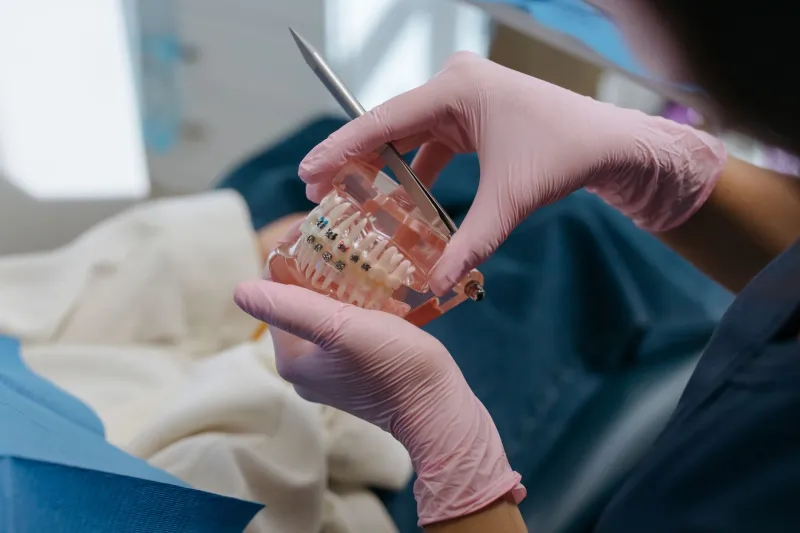
Fixed retainers, bonded to the back surfaces of the front teeth, offer a more reliable solution for many patients precisely because they require no behavioral compliance. However, they introduce their own maintenance demands, including careful flossing and regular monitoring for wire breakage or debonding.
Bite Problems and the Jaw: A Long Game
Malocclusion—the technical term for a misaligned bite—does more than affect aesthetics. An uncorrected bite places uneven mechanical stress on the teeth, the jaw joints (temporomandibular joints, or TMJ), and the surrounding musculature. Over years and decades, this imbalanced loading produces consequences that become increasingly difficult to separate from the original cause.
Patients who present with worn-down molars, cracked teeth, chronic jaw pain, or early-onset temporomandibular disorder (TMD) frequently have a history of untreated or partially treated bite issues. The connection is not always immediately apparent, particularly when the patient has lived with the malocclusion for so long that it feels normal.
Dental professionals who evaluate adults for TMD often find that the jaw dysfunction did not emerge suddenly—it developed gradually over years of compensatory muscle activity and uneven tooth contact. Addressing the underlying bite issue at that stage typically requires a multidisciplinary approach involving orthodontics, restorative dentistry, and sometimes oral surgery.
What Crowding Does to Gum Health
Overlapping and crowded teeth are not merely an aesthetic concern. Teeth that are difficult to clean create persistent environments where plaque accumulates, bacteria proliferate, and the risk of gum disease escalates.
Patients with significant crowding often have pockets of gum tissue that trap food and bacterial biofilm regardless of how diligent their brushing and flossing habits are. Over time, this chronic bacterial presence contributes to gingivitis and, if left unaddressed, progresses to periodontitis—a condition involving bone loss around the teeth.
Dentists who specialize in periodontal health note that crowding is one of the most common anatomical contributors to recurring gum problems in adult patients. Straightening teeth as an adult can meaningfully improve periodontal outcomes, but it does not undo the bone loss that may have accumulated over years of difficult-to-clean surfaces.
What Parents Should Actually Prioritize
For parents navigating orthodontic decisions for their children, several principles stand out from clinical experience.
Early evaluation matters. The American Association of Orthodontists recommends an initial orthodontic evaluation by age seven—not because treatment begins at seven, but because early assessment allows practitioners to identify developing problems that are far easier to address during growth than after it concludes. Palate expansion, for example, is significantly more effective in younger children and may reduce the need for tooth extraction or jaw surgery later.
The type of treatment matters less than compliance. Whether a teenager undergoes traditional metal braces or clear aligner therapy is largely secondary to whether they follow through with the treatment protocol. Clear aligners in particular depend heavily on patient discipline—they must be worn 20 to 22 hours per day to be effective. Adolescents who are not motivated to comply may achieve better outcomes with fixed appliances.
Post-treatment planning is not optional. The conversation about retention should happen before treatment concludes, not as an afterthought. Parents and patients should understand that retainer wear is a lifelong commitment, not a temporary phase.
Cost deferral is rarely cost savings. Families who delay orthodontic treatment due to financial constraints often encounter higher costs later, when more complex interventions are required. Exploring phased treatment plans, financing options, or dental school programs can make timely treatment more accessible.
The Adult Reckoning
For patients in their 30s and 40s who are now dealing with the downstream effects of teenage orthodontic choices—or the absence of them—the situation is rarely irreversible. Modern orthodontic options, restorative techniques, and periodontal therapies can address many of the consequences that have accumulated over time. But the path is longer and more involved than it would have been during adolescence.
At RAK Dental Clinic, adult patients frequently arrive with complex needs that trace back, at least in part, to earlier dental history. The goal in those conversations is never to dwell on past decisions, but to build a clear, practical path forward—one that accounts for where the patient is now and where their oral health needs to go.