Why Whitening Keeps Failing You: The Biology Behind Fading Teeth and What Dentists Actually Recommend
The Promise Versus the Reality
The whitening industry generates over four billion dollars annually in the United States, fueled by a persistent belief that a brighter smile is just a strip, tray, or gel away. Yet a significant portion of patients who undergo whitening treatments—whether at home or in a dental office—find themselves back where they started within a matter of months, sometimes weeks. The frustration is real, and it is not simply a matter of choosing the wrong product.
The truth is that tooth discoloration is rarely a single-cause problem, and whitening is rarely a single-solution fix. For patients seeking lasting results, the conversation must go deeper than what the packaging promises.
Understanding Why Teeth Darken in the First Place
To appreciate why whitening fails, one must first understand the mechanisms behind discoloration. Teeth darken through two distinct processes: extrinsic staining and intrinsic discoloration.
Extrinsic stains accumulate on the outer enamel surface and are caused by chromogenic compounds found in coffee, tea, red wine, tobacco, and certain foods. These pigments bind to the thin protein film that coats enamel, known as the acquired pellicle, and gradually build up over time.
Intrinsic discoloration, by contrast, originates within the tooth structure itself. Causes include aging—which naturally thins enamel and allows the darker dentin beneath to show through—as well as certain medications, fluorosis, trauma, and past dental restorations. Peroxide-based whitening agents address extrinsic staining effectively and can penetrate enamel to lighten some intrinsic discoloration, but they cannot reverse the structural changes that come with age or medication exposure.
This distinction matters enormously. Many patients seek whitening for discoloration that peroxide simply cannot fully correct, leading to disappointment regardless of treatment frequency.
The Biological Rebound: Why Results Fade
Even when whitening is appropriate for the type of staining present, results fade. This is not a product failure—it is biology.
Immediately after whitening, the enamel surface is temporarily more porous. The dehydration caused by bleaching agents makes teeth appear brighter in the short term, but as the enamel rehydrates over the following days, some of that apparent brightness diminishes. More significantly, the acquired pellicle begins to reform within hours of whitening, and with it, new opportunities for chromogenic compounds to bind to the enamel surface.
Patients who return to coffee, wine, or tobacco the same day as their treatment are, in effect, staining freshly sensitized teeth. Dental professionals consistently observe that the post-whitening window—typically the first 48 to 72 hours—is when teeth are most vulnerable to rapid re-staining.
What Manufacturers Don't Emphasize
Over-the-counter whitening products are formulated to produce visible results within a specific treatment window. What the marketing materials rarely address is the maintenance regimen required to sustain those results beyond the initial weeks.
Many at-home whitening strips contain lower concentrations of hydrogen peroxide or carbamide peroxide than professional-grade treatments, which means they require more frequent use to achieve comparable outcomes. However, excessive use of these products without professional guidance can contribute to enamel erosion and dentinal hypersensitivity—conditions that ultimately make teeth appear more yellow, not less, as thinning enamel reveals the darker dentin layer beneath.
The cycle is counterproductive: patients whiten aggressively, experience sensitivity, pause treatment, watch results fade, and repeat the process—often causing cumulative damage along the way.
The Maintenance Protocols That Actually Work
Dental professionals who specialize in cosmetic care approach whitening as a program, not an event. The most successful long-term outcomes are built on a combination of professional treatment and structured at-home maintenance.
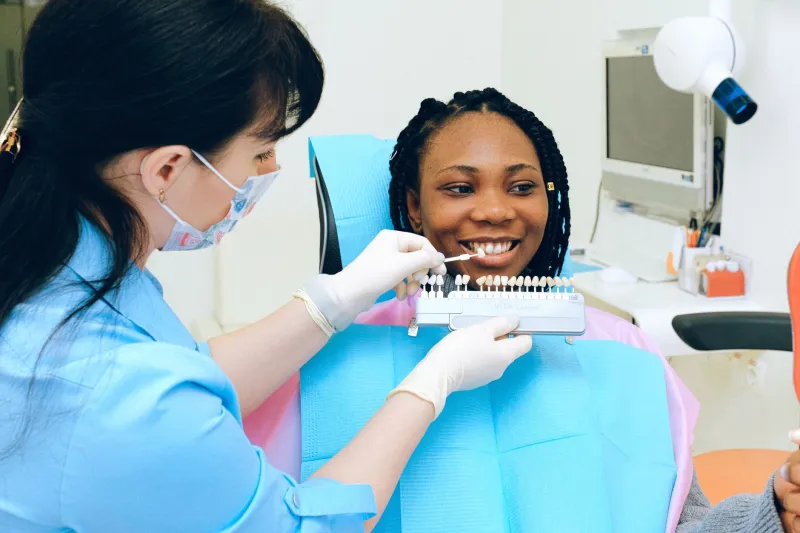
Professional in-office whitening provides the strongest initial results because it uses higher-concentration agents under controlled conditions, often with protective barriers for the gums and monitoring for sensitivity. This serves as an effective foundation.
Custom take-home trays, fabricated from precise dental impressions, allow patients to perform periodic maintenance treatments using professional-strength gels. Unlike one-size-fits-all strip products, custom trays ensure even coverage and minimize gel contact with gum tissue.
Whitening toothpastes used strategically—not as a daily replacement for regular fluoride toothpaste, but as a supplemental tool two to three times per week—can help manage surface staining between maintenance sessions. Dental professionals typically recommend formulas containing hydroxyapatite or mild abrasives rather than relying solely on peroxide.
Dietary modification during the maintenance window is perhaps the most underutilized strategy. Rinsing with water after consuming staining beverages, using a straw for iced coffee or tea, and waiting at least 30 minutes after whitening before eating or drinking anything other than water are simple habits that meaningfully extend results.
Restorations: The Whitening Blind Spot
A significant source of patient dissatisfaction involves dental restorations. Crowns, veneers, bonding, and tooth-colored fillings do not respond to peroxide-based whitening agents. If a patient has visible restorations in the smile zone, whitening the natural teeth around them will create a color mismatch—sometimes making the restorations appear more prominent and yellowed by contrast.
This is a critical pre-treatment conversation that must happen in a clinical setting. A qualified dentist will evaluate the presence and placement of any restorations before recommending a whitening approach, and may suggest replacing or adjusting restorations to match a new, lighter shade after whitening is complete.
When Whitening Is Not the Right Answer
For patients with significant intrinsic discoloration, extremely thin or damaged enamel, or complex restorative needs, whitening may provide minimal benefit or may not be appropriate at all. In these cases, cosmetic alternatives—such as porcelain veneers or composite bonding—may offer more predictable and durable results.
A thorough consultation with a dental professional is essential before committing to any whitening regimen. Understanding the underlying cause of discoloration, the condition of the enamel, and the presence of any restorations allows for a treatment plan that is matched to realistic outcomes rather than marketing expectations.
Building a Whitening Strategy That Holds
Sustained brightness is achievable, but it requires a realistic framework. Patients who see lasting success typically treat whitening as an ongoing element of their oral care routine rather than a one-time purchase. They schedule professional cleanings every six months, which remove surface staining before it embeds deeply into the pellicle. They use custom trays for periodic touch-ups under dental guidance. And they understand that dietary and lifestyle habits are not optional footnotes—they are integral to the outcome.
At RAK Dental Clinic, the approach to whitening begins with a comprehensive evaluation of the factors driving discoloration. The goal is not simply a brighter smile for a week—it is a result that reflects the full picture of your oral health and holds up over time.