What Your Screen Cannot See: The Dangerous Limits of Virtual Dental Assessments
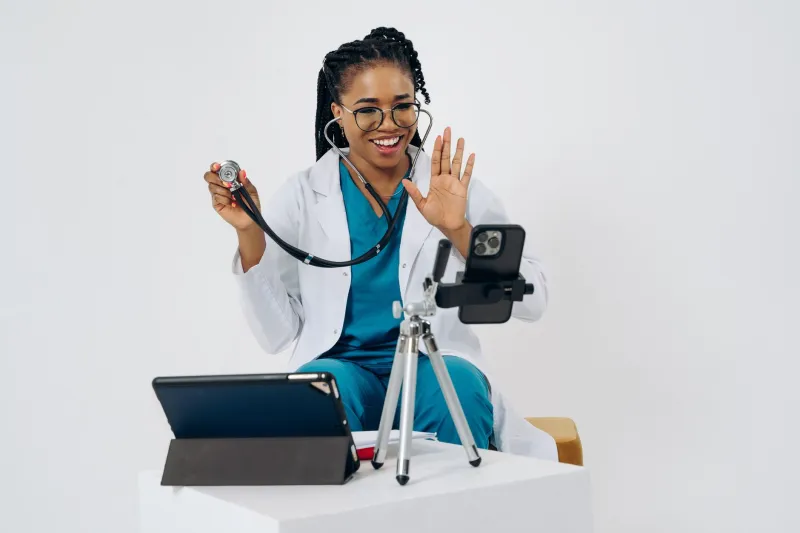
America has embraced telehealth with remarkable speed. From therapy sessions to cardiology consultations, the ability to connect with a clinician through a smartphone has changed expectations around healthcare access. Dentistry has followed this trend, with virtual consultations, app-based assessments, and online triage services proliferating across the country. The convenience is real. So are the limitations—and in dentistry, those limitations carry consequences that patients rarely anticipate until a problem has progressed well beyond its earliest, most treatable stage.
This is not an argument against technology. Digital tools have made meaningful contributions to oral healthcare delivery. But understanding precisely where those tools fall short is essential for anyone making decisions about their dental health based on what a screen can—and cannot—communicate.
The Fundamental Problem: Dentistry Is a Contact Sport
Diagnosis in dentistry depends heavily on information that cameras do not transmit. A clinician performing an in-person examination uses sight, yes—but also tactile feedback from a probe, the resistance of tissues under gentle pressure, the temperature response of a tooth to cold stimulus, the smell of an active infection, and the feel of lymph nodes beneath the jaw. None of these diagnostic inputs survive the translation to a video screen.
When a dentist taps a tooth and asks whether the sensation is sharp or dull, localized or radiating, they are gathering data that no photograph can replicate. When a hygienist measures the depth of the space between a tooth and the surrounding gum tissue, they are producing a number—a millimeter measurement—that is the difference between healthy tissue and early periodontal disease. A virtual consultation cannot generate that number.
Conditions That Routinely Escape Digital Detection
Early Decay Between Teeth
Interproximal cavities—those that develop in the contact areas between adjacent teeth—are among the most common dental problems in American adults. They are also among the least visible to the naked eye, even under ideal lighting conditions. Detecting them reliably requires bitewing X-rays, which capture the bone and tooth structure between teeth in a way that no camera angle can approximate.
A patient who photographs their smile and submits it for a virtual assessment may receive reassurance that their teeth look fine. That reassurance may be entirely accurate from a visual standpoint and entirely misleading from a clinical one. Decay between the molars will not announce itself to a camera. It will, however, continue to grow.
Periodontal Disease in Its Early Stages
Gum disease is frequently described as a silent condition, and that characterization is apt. Many patients with early to moderate periodontitis experience no pain, no visible swelling, and no obvious bleeding. The signs that are present—slight redness along the gum line, minor recession, slightly increased pocket depths—require a physical examination to detect and a periodontal probe to measure.
Virtual consultations that rely on patient-submitted photographs are working with images taken under variable lighting, at inconsistent angles, by individuals who have no clinical training in what to look for. The probability of catching early gum disease through this medium is low. The probability of missing it is high.
Oral Cancer Screening
Perhaps the most serious gap in virtual dental assessment involves oral cancer screening. A comprehensive in-person exam includes visual and tactile evaluation of the tongue, floor of the mouth, soft palate, cheeks, lips, and throat. Clinicians feel for asymmetries, note tissue color changes, and palpate for irregularities in the lymph nodes of the neck.
Oral cancer has a five-year survival rate of approximately 84 percent when caught at its earliest stage—a rate that drops significantly as the disease advances. Early lesions can be subtle: a small white or red patch, a slightly thickened area of tissue, a sore that does not resolve within two weeks. These findings require a trained eye, adequate lighting, proper positioning, and physical access to the tissues in question. They are not reliably detectable through a phone camera.
The Reassurance Problem
One of the subtler risks of virtual dental consultations is the false sense of security they can generate. A patient who engages with an app-based assessment and receives a response suggesting their teeth look healthy may feel justified in delaying an in-person visit. That delay can be clinically significant.
This is not a hypothetical concern. Research on patient behavior consistently demonstrates that when individuals receive reassuring health information—even from sources of uncertain reliability—they are less likely to seek follow-up care. In a domain where early detection is as consequential as it is in oral health, the cost of misplaced reassurance can be measured in more complex treatment, higher expense, and in some cases, worse outcomes.
Where Virtual Tools Genuinely Add Value
Fairness demands acknowledging what telehealth does well in a dental context. Virtual consultations can be genuinely useful for triaging acute concerns—helping a patient determine whether a chipped tooth or a new sensitivity warrants an emergency visit or can wait for a scheduled appointment. They can facilitate follow-up conversations after procedures, allow patients to share photos of post-operative healing for clinician review, and provide a channel for questions that do not require physical examination to answer.
For patients in rural areas with limited access to dental care, or for individuals managing significant mobility challenges, virtual tools may represent the most accessible form of professional guidance available. That access has real value, and it should not be dismissed.
The distinction worth drawing is between virtual tools as a supplement to professional care and virtual tools as a substitute for it. The former can enhance a patient's relationship with their dental provider. The latter creates gaps in care that may not become apparent until they are expensive to close.
The Case for Irreplaceable In-Person Visits
At RAK Dental Clinic, the comprehensive examination remains the cornerstone of care delivery—not because technology is dismissed, but because the clinical information gathered in person cannot be replicated by any current digital alternative. Radiographs, periodontal measurements, oral cancer screening, bite analysis, and tactile assessment together create a diagnostic picture that is simply not available through a screen.
Patients who have relied on virtual assessments and found them convenient deserve a straightforward explanation of what those assessments cannot provide—not to alarm them, but to ensure that convenience does not come at the cost of their health. A camera can show a dentist what your smile looks like. Only a thorough in-person examination can reveal what your smile is doing.