Restless Nights, Hidden Causes: How Dental Health May Be Disrupting Your Sleep
America has a sleep problem. According to the Centers for Disease Control and Prevention, roughly one in three American adults does not get the recommended seven or more hours of sleep per night. The usual suspects — stress, caffeine consumption, excessive screen time, and irregular schedules — receive most of the attention. Yet for a significant portion of the population, the true culprit operates silently, often going undetected for years: undiagnosed dental conditions that interfere with the body's ability to enter and sustain restorative sleep.
At RAK Dental Clinic, patients sometimes arrive seeking help for headaches, jaw soreness, or worn-down teeth, only to discover that these symptoms are also quietly undermining their sleep. The relationship between oral health and sleep quality is more intricate than most people realize — and more treatable than they might expect.
Why the Mouth and Sleep Are More Connected Than You Think
Sleep is not a passive state. The body cycles through distinct stages throughout the night, including light sleep, deep sleep, and REM sleep, each serving critical functions for physical recovery, memory consolidation, and emotional regulation. Anything that interrupts these cycles — even briefly — diminishes the restorative value of the night.
Dental conditions can disrupt sleep through several physiological pathways. Bruxism, the clinical term for teeth grinding or clenching, activates the jaw muscles with significant force during sleep. This muscular activity can be intense enough to rouse the nervous system from deeper sleep stages, fragmenting the sleep cycle without the sleeper ever fully waking. Over time, this fragmentation produces the same daytime consequences as outright insomnia: fatigue, difficulty concentrating, irritability, and reduced cognitive performance.
Temporomandibular joint (TMJ) disorders present a related challenge. The temporomandibular joint connects the jawbone to the skull and governs the mechanics of chewing, speaking, and swallowing. When this joint is inflamed, misaligned, or under chronic strain, it generates persistent discomfort that the brain registers even during sleep. Pain signals, even low-level ones, are processed by the nervous system around the clock, and they have a well-documented tendency to suppress deep sleep and elevate stress hormones like cortisol.
Bite misalignment — a condition in which the upper and lower teeth do not meet as they should — compounds these issues further. An improper bite can force the jaw into unnatural positions during sleep, straining muscles and joints simultaneously and creating a cycle of tension that the body cannot fully release overnight.
Recognizing the Signs Your Dentist Is Trained to Spot
One of the reasons dental-related sleep disruption goes unrecognized for so long is that its symptoms overlap with those of other common conditions. A person who wakes with a dull headache might attribute it to dehydration or tension. Someone who experiences facial soreness in the morning might assume they slept in an awkward position. Chronic fatigue is routinely blamed on work demands or lifestyle factors.
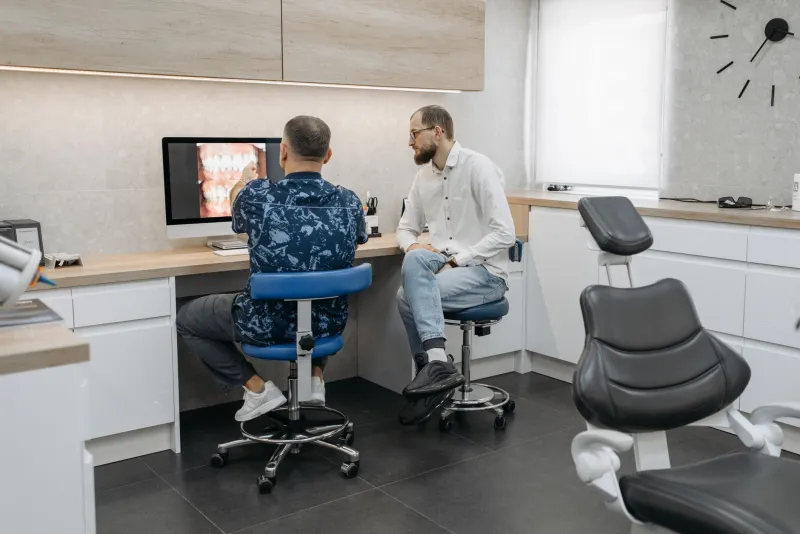
Dentists who are trained in sleep-related oral conditions look for a specific constellation of clinical signs. Worn, flattened, or chipped tooth surfaces are among the most telling indicators of nighttime bruxism. Even patients who are unaware of grinding often display unmistakable evidence of it in the enamel patterns on their teeth. Tenderness in the jaw muscles upon palpation, clicking or popping sounds in the temporomandibular joint, and asymmetrical wear patterns across the dental arch all inform the clinical picture.
A thorough dental examination may also include an assessment of the airway. In some patients, jaw positioning and oral anatomy contribute to airway narrowing during sleep, a factor that can worsen or even precipitate obstructive sleep apnea. While sleep apnea diagnosis requires collaboration with a sleep medicine specialist, dentists are often the first clinicians to identify anatomical risk factors that warrant further evaluation.
How Dental Treatment Addresses the Root Cause
When a dental condition is identified as a contributing factor to sleep disruption, treatment approaches are targeted and evidence-informed. They do not rely on sedating the patient or masking symptoms; instead, they address the underlying mechanical and physiological issues.
Custom occlusal night guards are among the most widely used interventions for bruxism. Unlike the generic, over-the-counter versions available at pharmacies, professionally fabricated night guards are precisely molded to the patient's dentition and calibrated to the specific bite relationship. They create a protective barrier between the upper and lower teeth, absorb and redistribute grinding forces, and allow the jaw muscles to rest in a more neutral position throughout the night. Many patients report a noticeable improvement in morning headaches and jaw soreness within weeks of consistent use.
Bite correction and occlusal equilibration may be recommended when misalignment is contributing to muscular strain. Depending on the severity, this can range from minor reshaping of specific tooth surfaces to more comprehensive orthodontic treatment. Correcting the bite reduces the compensatory tension that the jaw muscles carry during both waking and sleeping hours.
TMJ-specific therapies may include a combination of oral appliances, physical therapy referrals, and anti-inflammatory strategies. In cases where joint inflammation is significant, temporary dietary modifications that reduce jaw strain may be recommended alongside appliance therapy.
Oral appliance therapy for airway support represents a growing area of dental sleep medicine. For patients with mild to moderate obstructive sleep apnea or upper airway resistance, mandibular advancement devices — custom-fitted appliances that gently reposition the lower jaw — can help maintain airway patency during sleep. These devices are fabricated by dentists with specialized training in dental sleep medicine and are often considered by patients who cannot tolerate continuous positive airway pressure (CPAP) therapy.
When to Raise the Conversation With Your Dentist
If you consistently wake feeling unrefreshed, experience morning jaw pain or facial tension, notice that your teeth appear shorter or flatter than they once did, or have been told by a sleep partner that you grind your teeth at night, these observations deserve attention at your next dental appointment. The same applies if you have been managing unexplained headaches, ear discomfort, or neck pain without a clear diagnosis.
It is worth noting that sleep disruption and dental conditions often reinforce one another. Poor sleep elevates stress hormones, which in turn intensifies bruxism and jaw clenching. Addressing the dental component can interrupt this cycle, creating conditions in which the body is better equipped to achieve genuine rest.
A More Complete Picture of Oral Health
At RAK Dental Clinic, comprehensive care means looking beyond the immediate condition of the teeth and gums to consider how oral health intersects with overall well-being. Sleep is not a peripheral concern — it is foundational to nearly every aspect of physical and mental health. When dental factors are silently compromising it, identifying and treating those factors is not merely a matter of comfort; it is a matter of genuine health restoration.
If restful sleep has been elusive and conventional explanations have not provided adequate answers, a thorough dental evaluation may offer insights that have been missing from the conversation. The connection between your mouth and your nights is real, and addressing it may be among the most consequential steps you take toward a healthier, more energized life.